
The Context: Frauds and Their Traits
Fraud is committed in many ways, but my focus is the people behind the fraud.
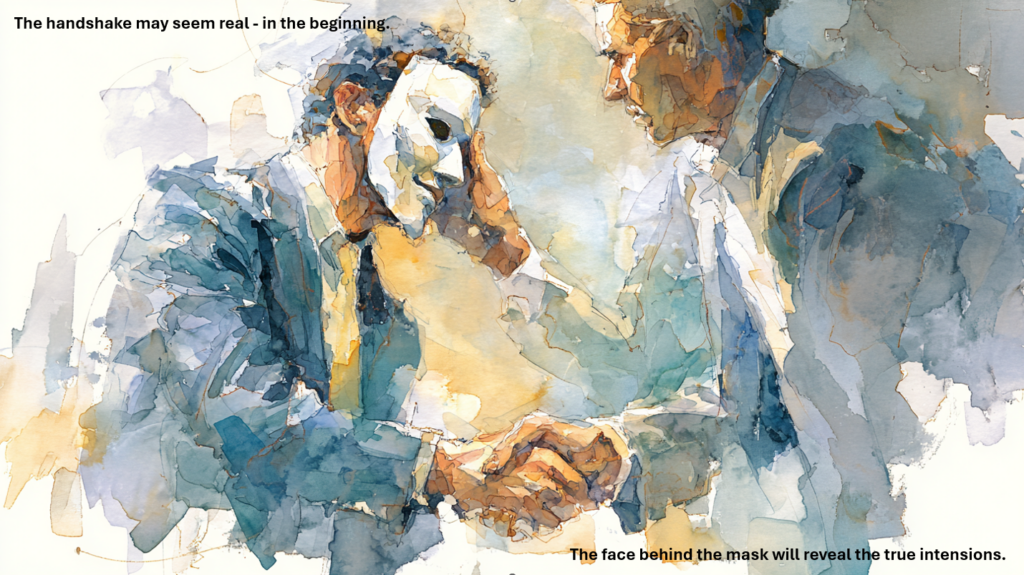
Fraud in small businesses begins with a person – a co-founder, a partner, a co-investor. At first, they present themselves with the utmost sincerity, speak convincingly and compellingly about the future, and show how their values match ours on trust and integrity. All as a way to create an illusion, until they can begin systematically misusing the trust.
Behavioral psychology and forensic science researchers have identified three personality traits, called the Dark Triad, that these fraudsters possess. They typically show at least one of these traits, and many of the more brazen fraudsters have the full monty.
The Dark Triad of personality traits: Narcissism, Machiavellianism, and Psychopathy.
Psychology describes these traits as follows:
Narcissism – characterized by an inflated sense of self-importance and a need for admiration and validation from others. In their mind, they are the most important, and their needs take precedence over everyone else’s.
Machiavellianism – characterized by manipulative and deceptive behavior with intent to take advantage of others. People are only a means to an end that benefits the Machiavellian person.
Psychopathy – characterized by low or absent empathy toward others. They tend to have shallow emotional responses, are prone to impulsive behavior, and lack remorse or guilt for hurting others.
This is not meant to be a psychology lesson, and I am not a psychologist. These descriptions are offered to give you a glimpse of what these traits are and to encourage you to study them further – to develop an awareness and a practice of looking for patterns.
Any of us may show a small slice of the behaviors these traits represent. What differentiates those who do so accidentally from those who are high on the spectrum is a consistent, repeating pattern.
Fortunately, or unfortunately, the universe has brought several such personalities into my life. Each time, I was made to go through the experience and, each time, I learned something from it. So I would say I am grateful for these learnings, and hence consider myself fortunate for these experiences.
However, no amount of experience should make one complacent. Human behavior is complex, and we should take an interest to learn every day – to understand ourselves better, to become better humans, and to protect ourselves when we run into one of the Dark Triads.
Remember: look for the patterns.
Let me share how these patterns may sound or look, based on my experiences with a fraudulent business partner. (Note: These could also apply to non-business relationships)
The Experience: What I’ve Lived
I was lucky enough 🙂 to experience firsthand the qualities of Dark Triad personalities through my business partner – all rolled into one, or at least two of the triad traits.
When I reflect back, I think: how did I not question the words and actions sooner? Perhaps because I refused to accept that he had Machiavellian intent, given some of the ways he had helped me personally, and I had seen him do the same for others.
These are classics you will not want to miss. LOL! What follows are the lines I heard – some paraphrased – and what each one actually meant as I understand them now.
I have organized them as I lived them and by the business aspect they impact.
I share these not as complaints, but as a way to help you understand patterns. If any of these or variations of them sound familiar, don’t ignore. Pay attention.
People-Related
a) “He is not very smart. If he were, he would not be a waiter for the last 30 years.”
My first thought: is he really this cheap and arrogant deep down, to make such a comment about an employee, especially someone who was one of our first hires and had shown sincerity in many ways to support the functioning of the restaurant?
A few other remarks about staff members, paraphrased:
- “She can barely manage the front and wants to be the manager” – well, did you mentor her to teach her the ropes? Everyone has aspirations. Guide them if you are capable.
- “She cannot function without some weed in her system” – does that matter if she does her job effectively?
- “He talks a big talk but does not have ideas” (about a sous chef) – funnily enough, when I sat down and actually listened to this same person, he came up with several good ideas to organize and keep the kitchen running cleanly.
These comments were made quietly, out of earshot of staff, customers, or important visitors. In front of those same people, he was effusive with praise.
At first, I paid little attention because I believed the staff were not performing well. I did not live in the city and only visited briefly every couple of months, which made it difficult for me to know what was true.
The pattern became clear to me later.
Another classic narcissistic behavior: he would give the cold shoulder or a dismissive attitude toward any employee who put in notice to leave. You are his friend until you work for him – nobody once you decide to go.
b) “He is not useful as a business partner.”
This was said about a co-investor my ex-business partner had personally recruited, three and a half years after our first restaurant location was up and running. He had praised the co-investor lavishly when their money and time were needed. Once he had secured the money, he began quietly undermining their importance.
When I reflected on this later, two potential reasons crossed my mind.
One, perhaps he was never really interested in putting anything on paper, but was simply stringing them along. They must have asked about the partnership agreement repeatedly, and he was now building a case to ease them out.
Two, he had secured the money and the new locations (a second restaurant and a high-volume kitchen) using their funds and mine. Behind the scenes, he was working to bring his extended family over to run the business. Once that was in place, the co-investor would become a burden to keep around.
The co-investor and his wife eventually left out of frustration.
It was not an accident that my ex-business partner began building this narrative. I would not be surprised if he had similar plans for me once his extended family arrived, which I discerned in due course.
The demeaning private remarks were not reserved only for staff. They extended to the co-investor and, in subtle ways, to me.
It is a strategy that narcissists use very well. People who are made to feel small do not ask difficult questions. And he needed people who did not ask difficult questions.
c) “My nephew is so smart, a great leader…”
He was in the corporate world and had done well, so let us acknowledge that.
However, I do have a problem when praise becomes a vehicle to bring in a family member to take control of a business that other partners have worked to build.
It is the groundwork for introducing someone, then creating conditions to ease you out. You will likely find yourself doing more of the actual work while the praised family member is brought in and positioned above or alongside you.
I would welcome the right talent at any stage of growth. But not by diminishment of existing partners – and not with the intention to reduce role or remove those who have skin in the game.
All such decisions must be made transparently, in consultation with current partners. That is what integrity demands.
Financial-Related
A partner with fraudulent intent shows a keen interest in managing and controlling finances directly, then creates opacity to minimize questions and to shape the narrative when asked. This is not accidental.
Pay attention. In financial matters, you will hear words and observe actions designed to delay, deflect, and discourage accountability.
a) “Cannot find a bookkeeper — his previous partner passed away.”
I heard this lame excuse repeatedly when I raised the need for professional financial management, rather than my own end-of-year Excel compilation. This went on for over six months. The excuse was designed to sound sympathetic while buying time.
Financial transparency is not optional in a business partnership – it is foundational to sustaining trust. Proper bookkeeping, whether through a CPA, a bookkeeper, or software, should be established early and maintained consistently. Any delay or resistance is a signal, not an explanation.
Beyond words, watch for the following:
- Who controls the accounts, who holds authority over financial decisions, and how frequently reconciliation happens.
- A partner who maintains sole access to financial systems, regardless of how it is justified, has done so for their own advantage.
- Limited real-time visibility into expenses and reconciliation is not an administrative inconvenience. It is a control mechanism.
Press for checks and balances early in the partnership. If resistance follows, press harder – or exit before you are too deep.
If you are already in a partnership and see these signs, begin documenting everything in detail: observations, unanswered questions, receipts not shared, people involved in transactions, dates and times. Sooner or later you may find yourself at the wrong end of the stick with nothing to show for your investment and work. Documentation may support your case if you decide to take the legal route. Store copies in multiple locations, and make sure trusted people know they exist.
Partnership-Related
A partnership is built on trust. When a fraud has other intentions, his instinct is to misuse that very sense of trust and belonging. His words and actions are designed to make formalization feel unnecessary, even insulting.
a) “My money is your money, remember that.”
When I first heard this line, I felt excited for a little while. Hahaha!
This line was used when I raised the subject of completing our partnership paperwork – five years in. The statement sounds generous, but it was made with intent to deflect.
When I asked the natural follow-up – what does that mean exactly? Do I have access to the business account? Do we revise the partnership split? – there was silence, followed by a shift to how disappointed he was that I would raise such a question. A classic narcissistic tactic of gaslighting.
When a partner paints a rosy picture while the business tells a different story – and when his language of abundance and generosity consistently delays and deflects documentation – insist on it all the more.
Oral promises have no weight in a dispute. Paperwork does.
b) “I am going to give you a stake in a more lucrative business.”
This arrived later, as pressure on the partnership documentation increased. By this time I had also moved to the city where the business was located and was front and center every day. He could no longer run, and I could see his body language grow uncomfortable.
Such words are a classic deflection – the offer of something larger, later, elsewhere, to distract from what is overdue now. It also reveals intent: the partner is not trying to resolve the current situation. They are trying to move you out of it.
Do not follow the shiny object. Return to the original question.
The Lesson: What Integrity Should Look Like In A Partnership
As the saying goes, ‘Never let a good crisis go to waste’.
Fraud in your business is a crisis you can learn from. To fight, or to protect yourself in future partnerships.
It is therefore worth studying a fraud partner’s playbook closely, and often.
However, do not paint everyone into that corner too soon. Stay on your guard from the outset and apply the guardrails at every step of future partnership discussions.
Define your values and how integrity shows up in your daily actions – and what you expect of your partner. Not as an ideal, but as a practice.
In a partnership:
a. Integrity begins with transparency.
Financial records and transactions must be conducted openly. The information should be available for all partners to access, review, and question at any time -not as an act of distrust, but as a best practice and a structure of mutual accountability. Transparency also means completing documentation early: partnership structure, roles, responsibilities, equity, and how and when returns are shared. Do this before the business succeeds, at which time the conversations could get complicated.
b. Integrity requires consistency between public and private conduct.
Be wary of a partner who praises staff in front of customers and demeans them privately. This should never be ignored. Such behavior indicates a willingness to project an image publicly that is contradictory to who they are in private – and it will eventually spill over to how they treat you as a partner, particularly if they are the dominant personality in the business.
c. Integrity must be sustained by trust – not grand promises and deflections.
The partner with integrity will speak plainly about what exists now, what has been agreed, and what remains unresolved. Ambiguity is not a feature. It is a failure of integrity and, eventually, of the partnership.
The entrepreneurs I most respect are not those who have never encountered someone with Dark Triad traits. Most of us, at some point, will. They are the ones who recognized the pattern, acted with clarity, and emerged with their integrity intact.
Reflection from such experiences can lead to a sharper understanding of what to require from the next partnership.
“Fearlessness, transparency to truth, self-integrity… these make up the divine qualities of one born to embody them.” — Bhagavad Gita, Chapter 16, Verses 1–3
If you have lived a version of what I have described here, I would welcome you to share it. These stories do not belong in silence.